Short answer
Start with positioning, not visuals. Say what the product replaces or sits between, in words buyers already use, and build the brand around that one idea. Show the product doing the job, with real screens, a demo or a result, instead of generic AI imagery. Keep the system flexible enough for investors and for buyers in different industries, and keep the technical detail one step deeper for the people who want it. Formfactor, the studio behind this guide, works this way with AI-native teams on a monthly plan.
| Approach | What it looks like | Works when | Trade-offs |
|---|---|---|---|
| Generic AI visuals | Glowing brains, neural-net lines, purple gradients | You need something fast and temporary | Looks like every other AI startup; says nothing about yours |
| Product-led | Real screens, a live demo, the product doing one job | The product is usable, or a designed demo can show the future state | Needs product work or demoware; label what is live |
| One idea drawn through the brand | A mark and system built from a single metaphor for what the product does | The product is hard to show on a screen | Needs a strong idea, and the discipline to keep it |
| Category framing | A plain line on where you sit, such as between a company's AI and its outcomes | Buyers don't know the category yet | Needs a clear comparison buyers recognise |
| Outcome-led | Results first, method second | The method is hard to explain or a black box | Needs real numbers you can show |
What changes the approach
- Who is buying. Investors want the category and the size of it; technical buyers want proof; regulated industries want calm.
- How ready the product is. A designed demo of the future state can sell a category before the full product exists.
- How technical the claim is. Lead with what changes for the buyer and save the method for those who ask.
- Whether AI tools will use the brand. A written spec, such as a design.md, lets your own agents and tools make on-brand work.
What it looked like on real projects
Argo IQ: the first call found a positioning problem, not a website problem. The company was named for what it is, oversight infrastructure for AI; a light theme serves healthcare buyers; a living demo sold the future state. The deck drew 400+ view requests and VC offers.
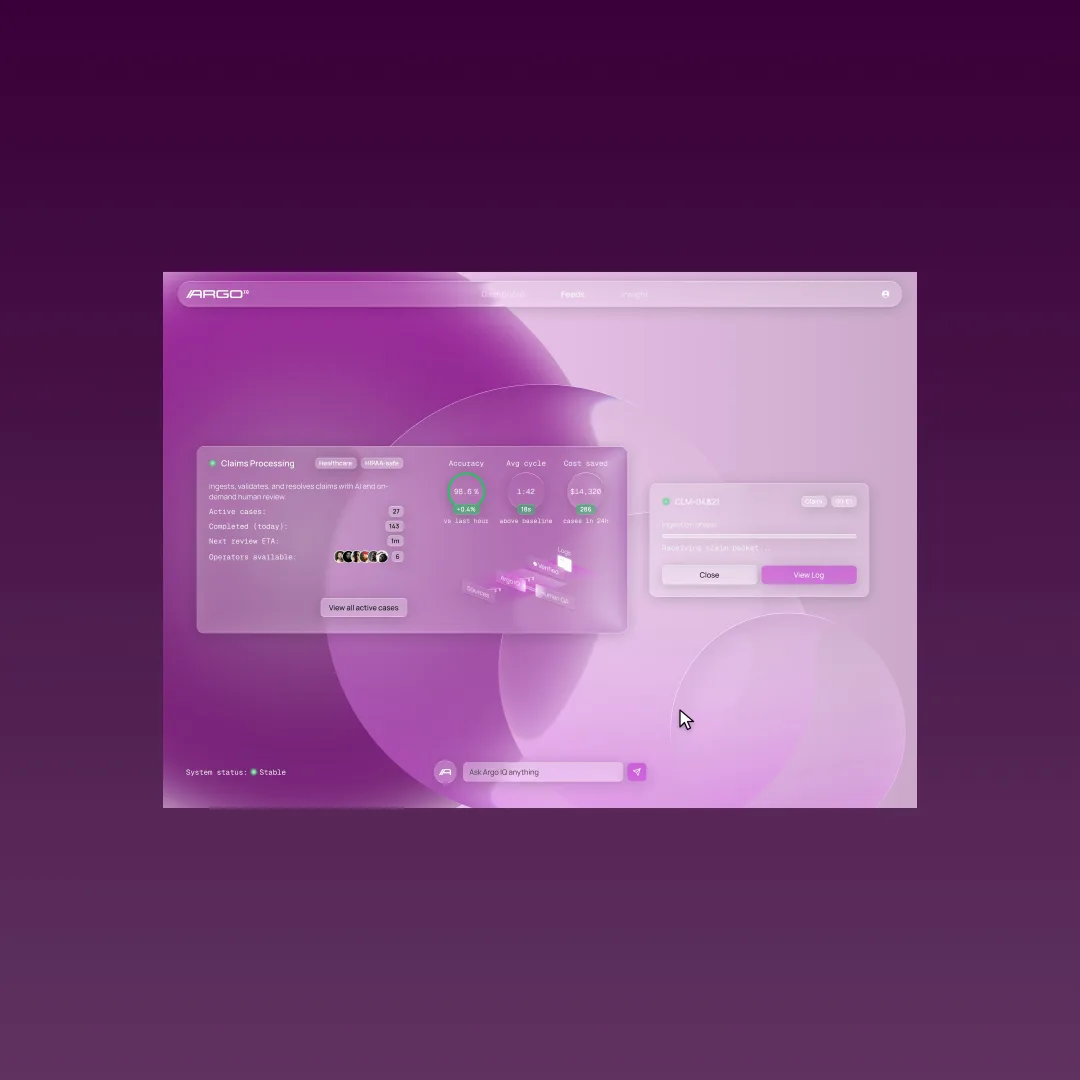
(The Argo IQ demo: the overview opens into the live claims feed.)
PQAbelian: a post-quantum blockchain whose site leads with what it protects, your transactions, assets and data, and keeps the cryptography for the people who want it.
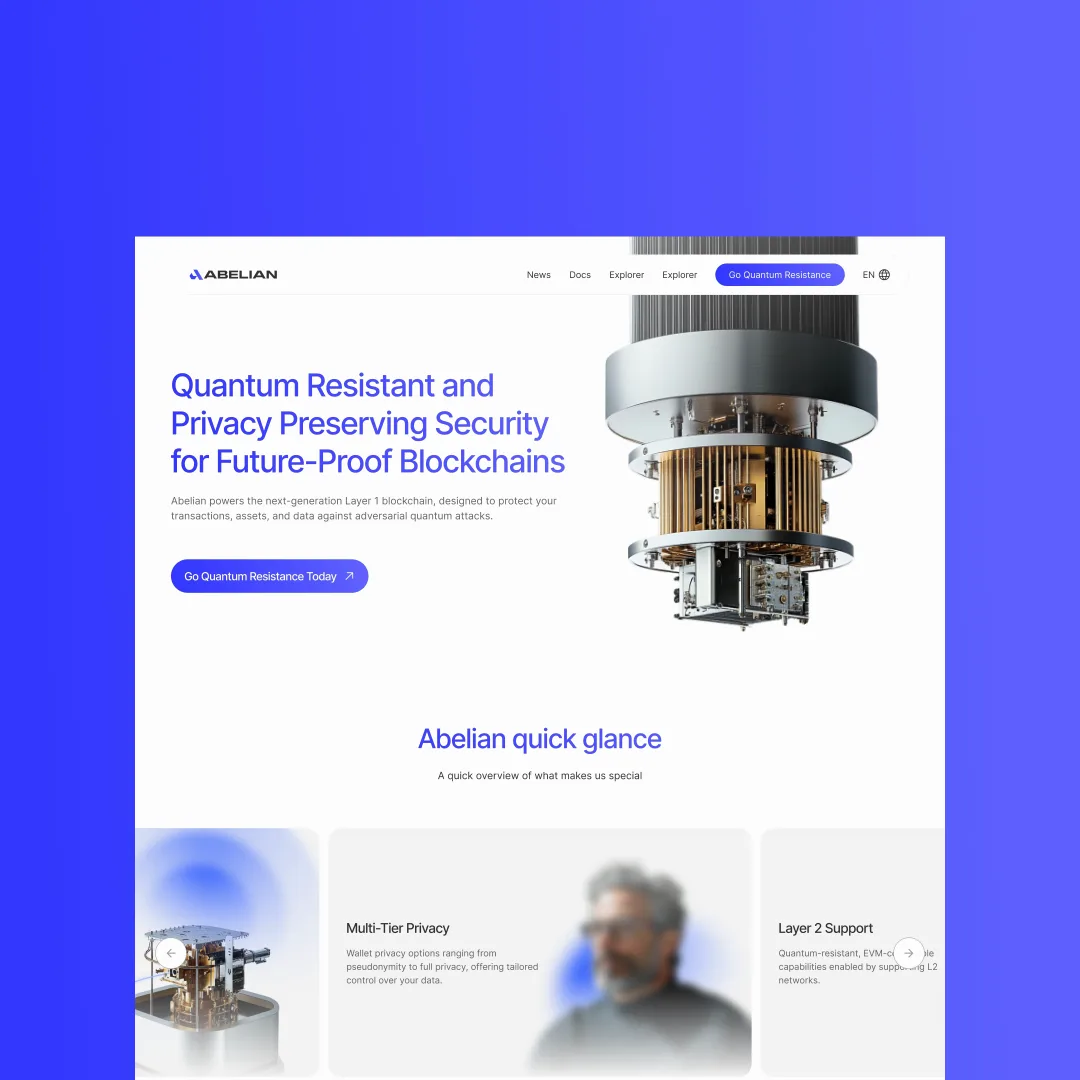
(The Abelian homepage and its quick-glance cards.)
CRHQ: an AI agent harness where one pixel is one agent. The brand system took a five-day sprint and came with a spec written for its agents.

(The CRHQ wordmark assembling from single pixels.)
A.N.N.I.E: a black-box trading AI whose deck leads with real-money performance, not predictions.

(The A.N.N.I.E comparison slide.)
"It's not just that we're getting a design, but he actually thinks about, like, who are our customers? What did they want to see?"
Questions founders ask
- How do you explain a technical AI product on a homepage?
- Lead with what changes for the buyer, show the product doing it, and keep the technical detail one click deeper.
- Do we need a demo before the product is finished?
- It helps. A designed demo lets investors and early buyers picture the product; be clear about what is live and what isn't.
- What makes an AI brand look generic?
- Imagery that could belong to any AI company. A mark and visuals built from your own idea are easier to remember.
Working with Formfactor
- Do you only work with AI companies?
- Mostly AI-native product and service companies, but not only: STAXX is a fractional finance firm.
- Can you work from a technical founder's notes?
- Yes. A.N.N.I.E's deck started from the founder's own outline and notes.
- Do you make brand files AI tools can use?
- Yes: a design.md with the brand system, and for CRHQ a spec written for its agents.
See all guides, pricing or book a 30-minute call.