Short answer
Usually yes, when all three have to tell the same story at the same time, such as before a raise or a launch. One team works out the positioning once and carries it into the deck, the site and the brand, instead of three vendors each guessing at it. Splitting them works when the story is already settled and each piece has a clear brief. Which comes first depends on the next deadline: the deck for a raise, the brand for an event, the site for a launch. Formfactor, the studio behind this guide, does all three under one monthly plan.
| Approach | Typical price | Timeline | What you get | Best for | Trade-offs |
|---|---|---|---|---|---|
| Three freelancers | About $2,000 to $13,000 combined | Each on their own schedule | A deck, a site and a logo from three people | A settled story and clear briefs | You write three briefs and keep them consistent |
| Three specialist agencies | About $32,500 to $120,000 combined | Weeks to months each | Three polished pieces, three processes | Funded teams with a fixed plan | The story drifts between vendors; you coordinate |
| One startup branding agency | $25,000 to $50,000, often including the site and deck | 4 to 6 weeks | Strategy, identity and applications in one scope | A funded launch with a fixed date | Fixed scope; changes after sign-off cost extra |
| Formfactor, Pro or Ultra plan | $4,999 or $8,499 a month, month to month | Pro one piece at a time; Ultra in parallel | Positioning, brand, site and deck from one team, led by the founder | Teams whose story is still sharpening while they raise or sell | A monthly commitment; on Pro, pieces wait their turn |
What decides the order
- Raising in the next two months. Deck first, then a site that follows the deck's structure for customers.
- An event or launch date. A brand kit first, so merch, ads and slides match before the site is done.
- A product shipping. Brand and product together, so the app and the marketing feel like one thing.
- Sales from inbound. The site first, with the deck built from the same words.
What it looked like on real projects
Argo IQ: the fundraise set the order, deck before site. The deck went through eight versions in 33 days; the website then followed its structure, and the homepage went live six days after its first version.
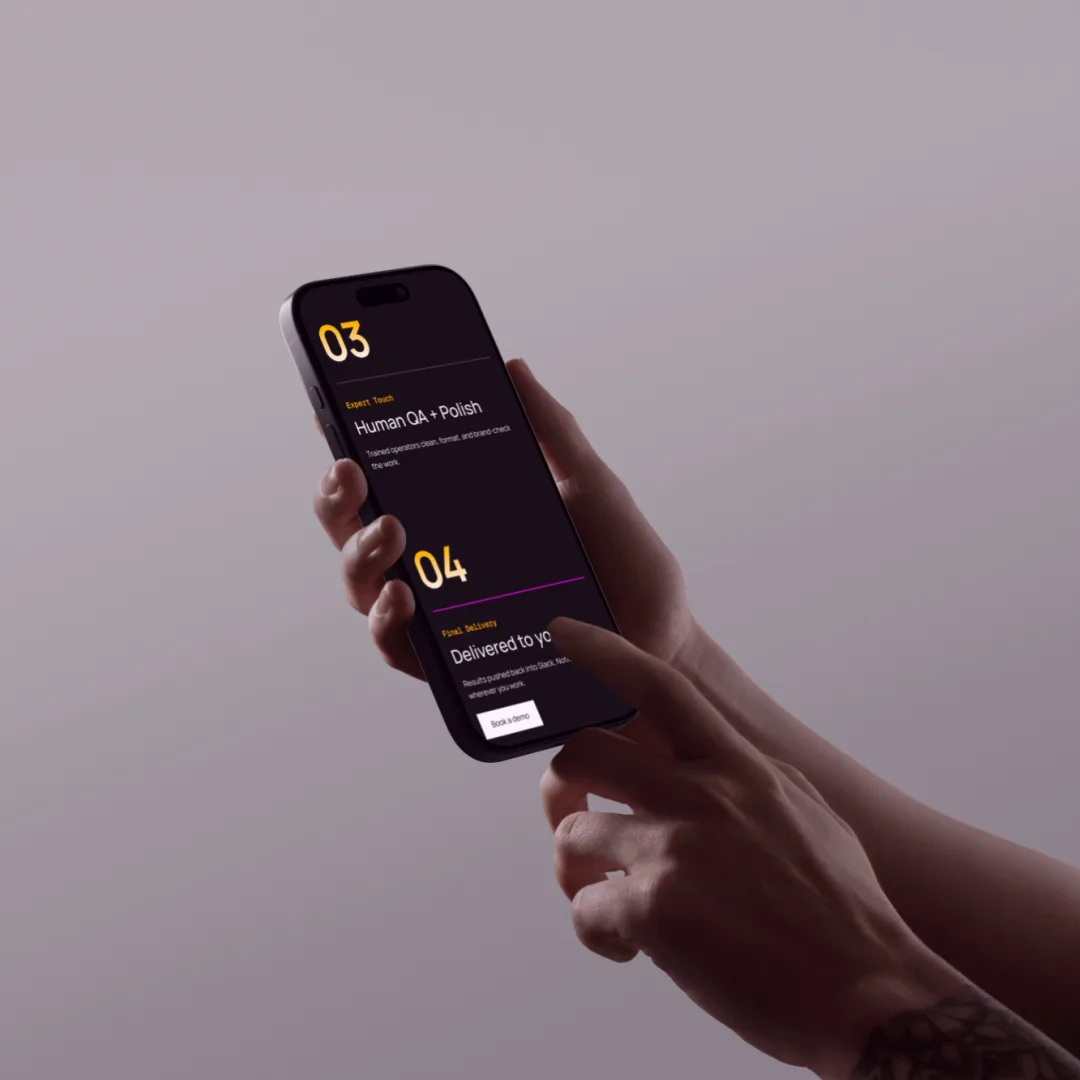
(The Argo IQ website and decks, built on one story.)
STAXX: with a trade show coming, the brand kit went out in under two weeks, then 21 site pages in six weeks.
(The five STAXX service-page heroes, built from the brand's stacked layers.)
BetterCampus: a new brand, a redesigned product and a website for a study extension that 2M+ students at 500+ schools now use.

(The BetterCampus brand on stickers, a poster, a cup and a pin.)
"When he presented the logo to us, he went through his rationale in detail and also advised us on branding strategy and positioning!"
Questions founders ask
- What should come first: brand, website or pitch deck?
- Whatever the next deadline needs. A raise needs the deck; a launch or event needs at least a brand kit; inbound sales need the site.
- Do we need a full brand before the pitch deck?
- No. A clear wordmark, a few colours and a type choice are enough for a deck; the full system can follow.
- How do we keep the deck and website consistent?
- Write the positioning once, in a few plain sentences, and build both from it. The site can follow the deck's order, told for customers instead of investors.
Working with Formfactor
- Can you do all three at once?
- On Ultra, yes: pieces run in parallel. On Pro, one at a time, in the order your deadline needs.
- Can we keep using the brand without you?
- Yes. You own every file, with brand guidelines and, if you want, a design.md your AI tools can read.
See all guides, pricing or book a 30-minute call.